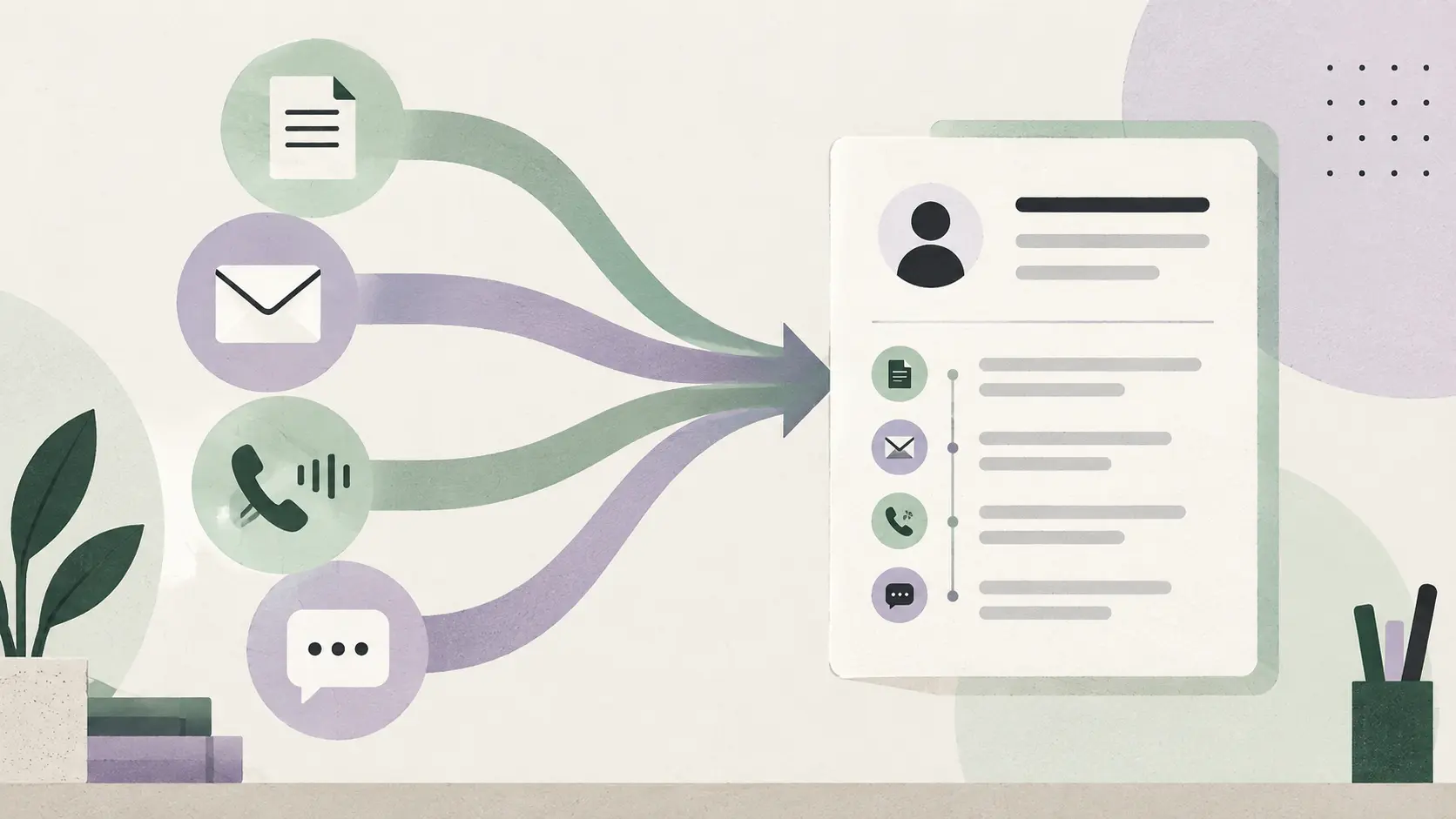
An insurance information request can start in one channel and finish in another.
A broker may send a form, receive part of the answer by email, clarify one figure on a call, and get the supporting document in a message. By the time the submission moves forward, the team has the information. The working record may still show only the final value.
That creates a problem I have not paid enough attention to. Collecting the answer is only one part of the work. The system also has to preserve how the answer arrived and what happened before somebody accepted it.
This matters if Insuveo eventually supports voice or messaging alongside email and forms. Adding another communication channel would be easy to demonstrate. Making the result trustworthy across channels is the harder product problem.
A reply can arrive in several shapes
Forms produce fields. Email produces threads and attachments. A phone call produces a conversation that may never become a formal record. A messaging thread can mix short answers, forwarded files, voice notes, and unrelated discussion.
The same question can receive different kinds of replies in each channel. A form might contain a number without a period. An email might explain the period but refer to an attachment. A call might confirm which entity the number belongs to. None of those pieces is sufficient alone.
If software copies the final number into a clean field, the next person may never see that it was assembled from several exchanges. They cannot tell which part came directly from the insured, which part came from an old document, or which part somebody inferred during a call.
I think the record should keep those differences visible. It does not need to reproduce every conversation on the main screen. It should let a reviewer open the source trail when the detail matters.
The channel is part of the source
A source record needs more than a link to a thread.
It should identify the original question, the person or role that answered, the channel, the time, the supporting message or document, and any later confirmation. If one answer combines several sources, each source should remain attached to the part it supports.
This becomes especially important when a reply changes meaning during follow-up. Suppose a client sends a revenue figure in a message. On a call, they clarify that it covers one entity rather than the full group. The original value has not simply been confirmed. Its scope has changed.
A system that keeps only the latest field can hide that change. A system that stores every raw message without relating it to the question leaves the reviewer to reconstruct the change. The useful middle layer is a sourced answer with a visible revision history.
Voice creates a specific evidence problem
Voice is attractive for collection because speaking can be easier than completing a long form. It can also produce ambiguity.
A transcript may contain recognition errors. The speaker may correct themselves later in the call. A sentence can sound like confirmation while referring to a different period or entity. The agent may ask a follow-up that was outside the plan approved by the broker.
For a voice response, I would want the system to propose a structured answer after the call and ask the operator or respondent to confirm the important details. The record should retain the relevant part of the transcript, subject to the team's consent and retention rules, and show who confirmed the final version.
The structured answer should never become more certain than the conversation. If the caller says a figure is approximate, the field should retain that qualification. If the transcript is unclear, the request stays open.
This makes voice less magical than a demo might suggest. It also makes it more usable for real coordination. A natural conversation has value here only when it produces information that another person can review and use.
One request should survive a channel change
The workflow should not restart each time the channel changes.
If a form answer is incomplete, the approved follow-up might go by email. If the recipient prefers a call, the operator should see the same open question and source context before speaking. When the supporting file later arrives through a message, it should close the same request rather than create an unrelated record.
That requires a stable request underneath all communication. The request has a purpose, a set of approved respondents, open questions, source requirements, contact permissions, and a stopping rule. Channels become ways to continue that request.
The permissions may differ by channel. Approval to email a client does not automatically permit an automated call or message. A person may be comfortable receiving a reminder in one place and uncomfortable in another. The plan should state which channel is allowed for each action and when a person must take over.
Automation should assemble before it acts
An early version of this product does not need to communicate everywhere.
It could begin by assembling replies from a small set of approved sources into one working record. The system would match each reply to an open question, propose the answer, attach the source, and flag missing context. A person would confirm the result before it moved into a submission, renewal, servicing request, or claim record.
Outbound actions should come later and remain narrow. The system might draft a specific clarification or prepare a call brief. It should pause when it cannot identify the right respondent, when two channels disagree, or when a reply introduces a new issue.
This direction remains a product hypothesis. A few conversations about messaging and voice do not establish demand, volume, or willingness to change an existing process.
The first test should follow one recurring request that crosses at least two channels. I would compare the current working record with a sourced answer record and ask a colleague who missed the original exchange to continue the task. Can they see what was asked, what was answered, which source supports it, what changed, and what remains uncertain?
If the source trail creates more work than it removes, the design is wrong. If it lets the next person proceed without searching several conversations, the channel has become useful context instead of lost history.