Insurance workflow notes
The work between the client question and the insurance decision.
These are notes for brokers, underwriters, claims professionals, operations teams, and anyone who has had to chase a missing document, clarify an answer, compare what changed at renewal, or reconstruct context from a long email thread. We are writing about those workflows because that is where we are building Insuveo.
Latest
From recent insurance workflow research
A fire insurance quote needs a calculation trail
When a fire quote is calculated in a spreadsheet and entered into an insurer system, the case should retain the inputs, calculation version, adjustments, and final submitted values.
More notes from the field
Why start an insurance AI trial with non-EB placement
A first insurance AI trial needs a bounded workflow, visible evidence, and a clear human decision boundary. One live non-EB placement offers a useful test.
An insurance AI pilot should earn access to real data
Synthetic cases can test an interface, but they cannot establish workflow fit. An insurance AI pilot should earn broader data access through bounded evidence.
An insurance browser copilot needs a visible read boundary
A browser copilot can reach email text and attachments at the point of work. Its read boundary should show what is captured, where it goes, and how long access lasts.
Insurance automation needs an exception queue
When a routine insurance path is automated, the remaining work needs a visible queue with a reason, evidence, owner, age, and route back into the process.
A broker quote comparison needs a difference ledger
Quote normalization helps a broker compare options, but each standardized value should retain its source, interpretation, version, and unresolved ambiguity.
Insurance commissions based on effort need a servicing record
IRDAI's September 2026 consultation links proposed commission design to product complexity and selling and servicing effort. That makes suitability and post-sale work part of the operating record.
Delegated underwriting needs a decision state
An underwriting outcome should preserve the evidence, authority, referral, exception, and approval that produced it so the next person can reconstruct the decision.
Insurance evidence needs a revalidation trigger
A sourced fact can still become stale. Insurance records should show when evidence was checked, what could invalidate it, and who must confirm it again.
An insurance email agent needs a write back boundary
Email and messaging can carry the context behind an insurance update, while an internal system holds the official state. An agent should propose sourced changes and write them back only within approved limits.
Multilingual insurance intake needs a meaning trail
A voice answer can pass through transcription, translation, and field extraction before an insurance team uses it. Each step should preserve the original meaning, uncertainty, and confirmation.
Why policy wording needs a decision trail
A fixed policy template can still produce case-specific wording changes. The document becomes safer to prepare when every change keeps its instruction, source, reviewer, and approval state.
What relationship-based insurance asks of AI
Insurance relationships carry context that rarely reaches a system. AI may be most useful when it prepares the adviser with the right history, open questions, and source material.
Insurance trust breaks before a claim is denied
Distrust in insurance is often blamed on rejected claims. In practice, it can begin much earlier through unclear advice, missing records, silent handoffs, and weak claims preparation.
Why insurance penetration in India remains low
India's insurance market is growing, yet premiums remain a small share of GDP. The gap reflects affordability, trigger-based buying, distribution economics, and trust as much as awareness.
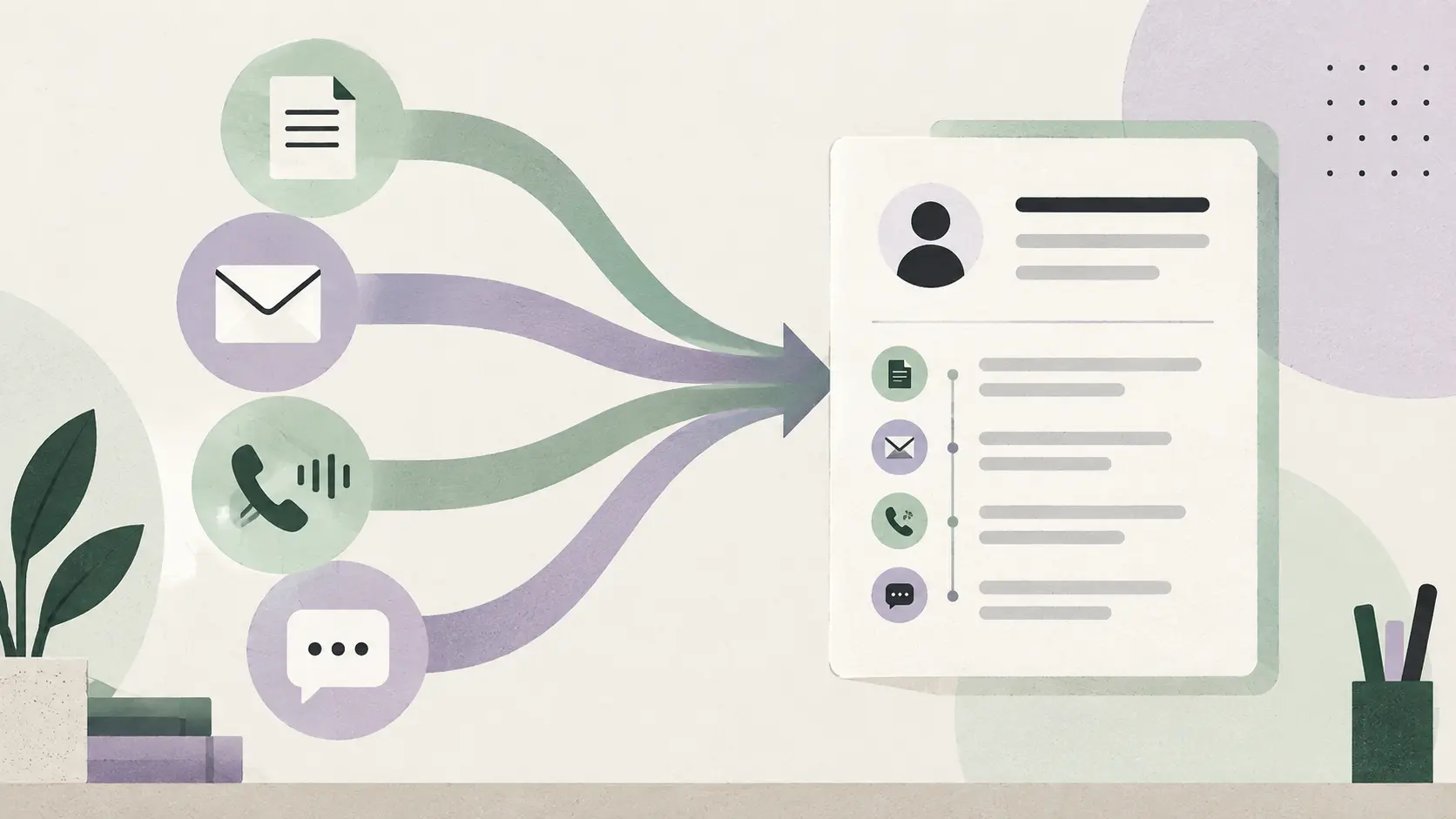
An insurance answer should not lose its channel
A fact may arrive through a form, email, call, message, or document. The working record should preserve where it came from, what it answered, and whether anyone confirmed it.
What approved should mean inside a claim record
Claims work becomes hard to follow when coverage, cost consent, document review, and payment are all recorded as approved. The record needs to preserve the scope of each decision.
Why a commercial insurance renewal turns into a follow-up project
The renewal form is rarely the hard part. The real work starts when information is incomplete, last year's answers need checking, and the broker has to coordinate people across the client's business.
A form rarely finishes an insurance data request
Forms collect known fields. Insurance teams still have to clarify incomplete answers, find the right respondent, and keep track of where each fact came from.
The insurance decision is not always the bottleneck. Getting the information is.
Ask a broker, underwriter, or claims professional what slows work down and the answer is often surprisingly ordinary: the missing figure, outdated document, unanswered email, or context nobody carried forward.
An insurance agent should know when not to act
Approval boundaries are not a layer to add after automation. They are part of the workflow design: who can be contacted, what can be asked, and when the system must stop.
What an underwriter needs before the risk decision is often more basic than AI
Before an underwriter can assess a risk, somebody has to make sure the submission is usable: current figures, the right schedules, clear answers, and enough context to know what is still missing.
The expensive part of an insurance handoff is making the next person reconstruct the story
A client, broker, underwriter, claims team, lawyer, or surveyor may all touch the same request. The handoff gets expensive when the answer moves forward but the context does not.
Why I am writing these
I want to understand the parts of insurance work that look small from the outside and take hours on the inside.
I'm Sahil Maheshwari, the founder of Insuveo. My background is in software and AI, so I am deliberately spending time learning the operational reality from people who actually do the work: brokers, underwriters, claims teams, insurance operations, and corporate risk teams.
If a post sounds like a workflow you deal with, or gets something wrong, I would like to hear from you. You do not need to prepare anything. A messy email thread, an awkward handoff, or a process your team complains about is enough context to start.
Send me a note on LinkedIn